







56%
18%
15%
12%
9%
8%
7%
6%
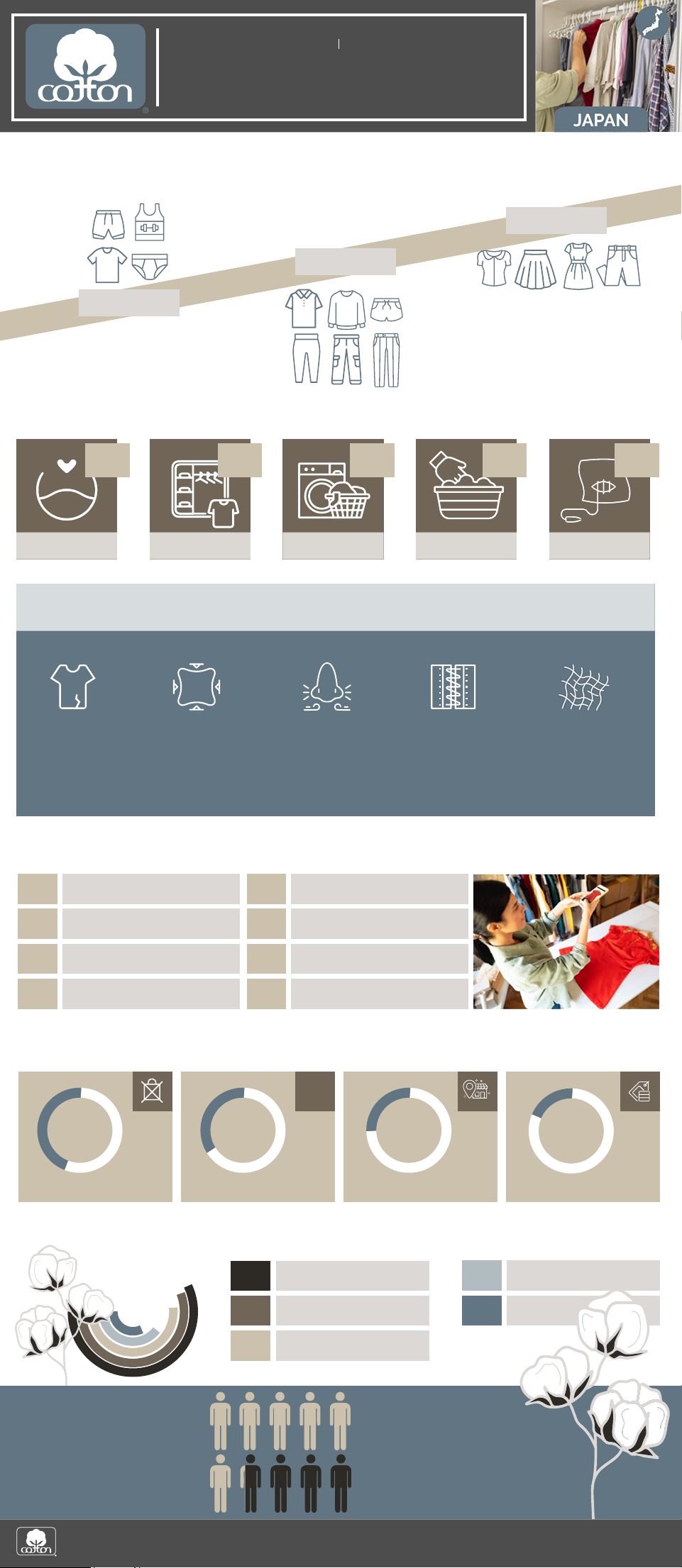
DURABILITY MATTERS, AND CONSUMERS SAY COTTON LASTS
Percent saying factor contributes to clothing longevity:
57%
55%
51%
30%
37%
Quality of construction
Laundering methods
Fiber content
Price
Origin
If clothing lasts less than 6 months, consumers will:
Stop buying the brand Take no action Shop elsewhere
42% 37% 25%
Note the fiber content
20%
MANY FIND NEW USES FOR CLOTHING THEY STOP WEARING
What consumers do with clothing they no longer wear:
CONSUMERS WEAR THEIR CLOTHING AN AVERAGE OF ALMOST FIVE YEARS
Average years worn before considered worn out or not worn regularly, by garment type:
Top activities consumers take to extend the lives of clothing:
HOLES, POOR FIT, ODORS, AND THREADBARE FABRIC MAKE CONSUMERS STOP
WEARING GARMENTS
Top reasons why consumers stop wearing clothing:
Hole or tear in
the clothing
No longer fits Odor that will
not wash out
Hole or split in
the seams
64% 62% 55% 54% 52%
Threadbare fabric
Wash delicate
Wear less
Wash less
of consumers expect
cotton clothing to last
longer than garments
made from polyester,
rayon, or other
manmade fibers.
63%
Throw away
Sell
Keep
Recycle
Repurpose
Give to friends/family
Return
Donate
Hand wash
4.5 TO 5 YEARS
LESS THAN 4.5 YEARS
Sweatshirts/sweaters,
Casual shirts, Causual shorts
Sweatpants/leggings,
Casual pants, Dress pants
Dress shirts, Skirts,
Dresses, Denim jeans
MORE THAN 5 YEARS
27% 23%24%
Mend holes
22%
Athletic bottoms,
Athletic shirts,
T-shirts, Underwear
26%
JAPAN
DURABILITY SURVEY
COTTON INCORPORATED’S
SUPPLY CHAIN INSIGHTS
in Japan
For More Information Contact: Corporate Strategy & Insights at MarketInformation@cottoninc.com
CCI & Cotton Incorporated's Global Durability Survey 2025 (Japan), n=1,020
AMERICA’S COTTON PRODUCERS AND IMPORTERS. Service Marks/Trademarks of Cotton Incorporated. ©2026 Cotton Incorporated.